
- 01/04/2026
- Dr. Chirag Bhirud
- 0 Comments
- 10 Views
- 0 Likes
- Blog
Sphincter-preserving surgeries for rectal cancer
Receiving a rectal cancer diagnosis is an overwhelming experience. Beyond the primary goal of removing the cancer, most patients have a deeply personal concern: “Will I need a permanent colostomy bag?”
In the past, many rectal cancer surgeries resulted in the permanent removal of the anal sphincter, requiring patients to use an external bag for waste. However, thanks to medical advancements and the expertise of a surgical oncologist in Pune like Dr. Chirag Bhirud, the narrative has changed. Today, sphincter-preserving surgeries allow many patients to maintain natural bowel function while effectively treating the cancer.
As a specialist providing rectal cancer treatment in Pune, Dr. Chirag Bhirud focuses on balancing oncological safety with the long-term quality of life of his patients.
What is Rectal Cancer?
Rectal cancer occurs in the rectum, which is the last several inches of the large intestine. Because the rectum is located in a tight space within the pelvis, surgery requires extreme precision. The proximity to the anal sphincter muscles—the muscles that control bowel movements—is what makes these cases complex.
When seeking rectal cancer treatment in Pune, it is vital to consult a specialist who understands both the oncology and the functional outcomes of the surgery. Early detection and a multidisciplinary approach are key to successful results.
Understanding Sphincter-Preserving Surgery:
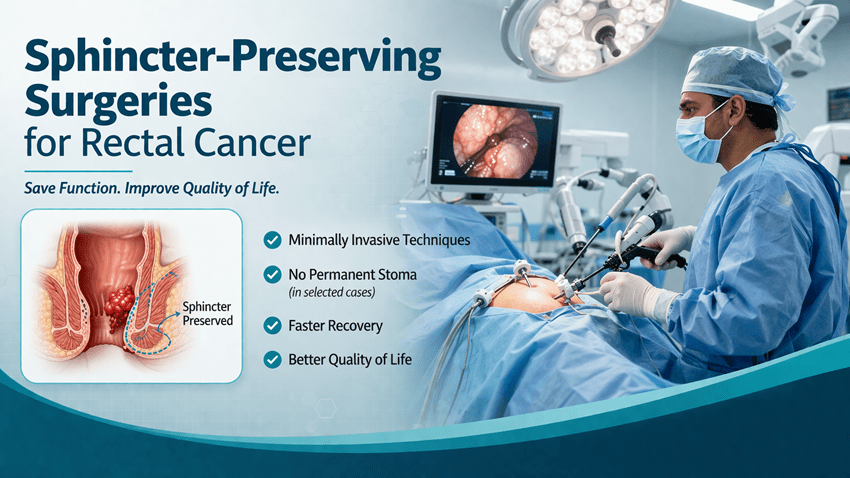
Sphincter-preserving surgery refers to techniques where the cancer is removed, but the anal sphincter muscles are left intact. This allows the surgeon to reconnect the healthy part of the colon directly to the remaining part of the rectum or the anus (anastomosis).
Common Types of Preserving Surgeries:
- Low Anterior Resection (LAR): The most common procedure where the tumor is removed, and the colon is attached to the rectum.
- Ultra-Low Anterior Resection: Used when tumors are very close to the sphincter muscles.
- Intersphincteric Resection (ISR): A highly specialized technique used for very low rectal cancers to avoid a permanent stoma by removing only the internal part of the sphincter.
- Coloanal Anastomosis: Connecting the colon directly to the anus when the entire rectum must be removed.
The Role of Robotic Surgery in Rectal Cancer:
As a leading cancer surgeon in Pune, Dr. Chirag Bhirud utilizes advanced technology to improve patient outcomes. Robotic-assisted surgery, using the Da Vinci robotic system, is a game-changer for rectal cancer.
The pelvis is a narrow area filled with delicate nerves and blood vessels. The robotic platform provides:
- Enhanced 3D Vision: Allowing the surgeon to see the tumor and nerves with incredible clarity (10x magnification).
- Greater Dexterity: Robotic instruments can maneuver in tight spots with “wristed” movements that exceed the human hand.
- Precision: This precision is exactly what allows for “sphincter preservation,” ensuring that the cancer is removed while the nerves controlling bowel, bladder, and sexual function are protected.
Benefits of Sphincter Preservation:
The primary advantage of these surgeries is the avoidance of a permanent colostomy. This offers several benefits:
- Psychological Well-being: Maintaining natural body functions helps patients feel more confident and “normal” post-surgery.
- Physical Comfort: No need to manage external bags or deal with skin irritation associated with stomas.
- Faster Recovery: Minimally invasive techniques (robotic/laparoscopic) lead to less pain and shorter hospital stays.
- Preserved Pelvic Function: Precision surgery helps protect nerves responsible for urinary and sexual health.
What to Expect During Treatment in Pune?
When you visit Dr. Chirag Bhirud for rectal cancer treatment in Pune, you receive a multidisciplinary approach at Jupiter Hospital, Baner.
- Diagnosis and Staging: Before surgery, tests like high-resolution MRI and Colonoscopy are performed to determine the exact distance of the tumor from the anal opening.
- Neoadjuvant Therapy: For Stage II or III cancers, radiation or chemotherapy is often given before surgery to shrink the tumor. This “downstaging” frequently makes a sphincter-preserving surgery possible when it initially seemed difficult.
- The Procedure: Using robotic or laparoscopic methods, Dr. Chirag Bhirud performs the resection with a focus on “Total Mesorectal Excision” (TME), the gold standard for preventing cancer recurrence.
- Post-Operative Care: Recovery involves pelvic floor exercises (Kegels) and dietary management to help the “new” rectal connection function effectively over time.
Why Choose Dr. Chirag Bhirud for Your Treatment?
Choosing the right surgical oncologist in Pune is the most critical step in your recovery journey. Dr. Chirag Bhirud brings over 11 years of specialized experience to the table.
Professional Expertise:
His academic background is rooted in India’s premier medical institutions:
- MBBS: Nair Hospital, Mumbai.
- MS (General Surgery): BJMC, Pune.
- MCh (Surgical Oncology): GCRI, Ahmedabad.
- Fellowship: Robotic and Laparoscopic Surgical Oncology.
As an award-winning robotic surgeon, Dr. Chirag Bhirud combines academic excellence with a compassionate, patient-centered approach. His goal is not just to treat the disease, but to ensure the patient returns to a high quality of life.
Early Detection Saves Lives:
It is important to remember that the success of sphincter-preserving surgery often depends on how early the cancer is found. Dr. Chirag Bhirud encourages everyone to be aware of the warning signs:
- Changes in bowel habits (diarrhoea or constipation lasting more than a few days).
- Rectal bleeding or blood in the stool.
- Abdominal pain or cramping.
- A feeling that the bowel doesn’t empty completely.
- Unexplained weight loss.
If you notice these symptoms, consulting a Cancer Doctor immediately can make a world of difference.
Conclusion:
Rectal cancer is a challenge, but it does not always mean a life-changing permanent stoma. With the right expertise and technology, preserving your quality of life is possible.
If you are looking for a Surgical Oncologist in Pune or an expert Cancer Surgeon in Pune, Dr. Chirag Bhirud offers the skill and compassion needed for a successful recovery.
Book your consultation today. Don’t wait for symptoms like rectal bleeding or bowel changes to worsen. You can book an appointment with Dr. Chirag Bhirud by calling us directly. We are here to help you navigate this journey with confidence.
Frequently Asked Questions (FAQ's):
Yes, robotic surgery is highly safe and often results in less blood loss and fewer complications compared to traditional open surgery.
Most patients are walking within 24 hours and can return to light activities in 2–4 weeks, depending on the specific procedure.