
- 27/08/2026
- Dr. Chirag Bhirud
- Blog
Robotic vs Laparoscopic Cancer Surgery: Which Is Right for You?
Medically reviewed by: Dr. Chirag Bhirud, Surgical Oncologist & Cancer Surgeon
When you or a loved one receives a cancer diagnosis, choosing the right surgical approach is one of the most critical decisions you will make. Surgery remains the most effective way to remove cancerous tumours. Today, patients no longer have to rely solely on traditional “open surgery,” which requires large cuts, longer hospital stays, and painful recoveries.
Modern surgical oncology offers advanced minimally invasive cancer surgery options that use small keyhole incisions. The two most popular advanced options are laparoscopic surgery and robotic-assisted surgery.
As Dr. Chirag Bhirud, a leading Cancer Surgeon in Pune with over 11 years of experience in complex cancer operations, I believe in transparent, patient-centric care. Neither option is universally “better”—the best choice depends entirely on your specific tumor site, cancer stage, anatomical location, and health background.
This guide breaks down Robotic vs Laparoscopic Cancer Surgery in simple terms to help you make an informed decision for your treatment journey.
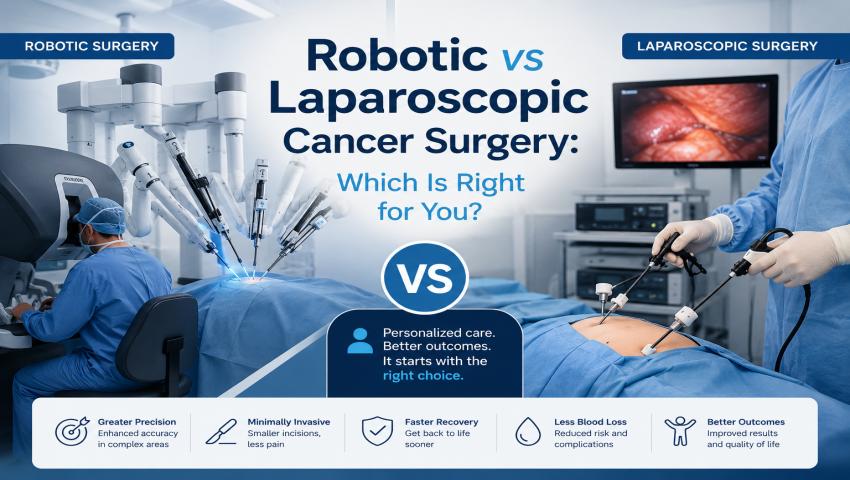
Robotic vs Laparoscopic Cancer Surgery at a Glance:
- Laparoscopic Cancer Surgery: Uses a 2D camera and long, straight handheld tools inserted through tiny keyhole cuts. It is highly effective and cost-friendly for standard abdominal cancers like colon or stomach cancer.
- Robotic Cancer Surgery: Uses the Da Vinci Robotic System, giving the surgeon 3D high-definition magnified vision and wrist-like instruments that turn 360 degrees. It offers superior precision in deep, tight spaces like the pelvis, throat, or prostate.
- The Verdict: Both offer smaller scars, less pain, and faster healing than open surgery. The machine is only an extension of the human hand—the surgeon’s expertise ultimately determines the success of your operation.
Understanding Minimally Invasive Cancer Surgery (MIS):
Minimally invasive cancer surgery removes tumors through small incisions (usually 0.5 cm to 1 cm) instead of one large open wound. This results in less muscle damage, minimal blood loss, fewer wound infections, and faster return to normal daily life.
Both laparoscopic and robotic techniques are forms of minimally invasive surgery. Understanding how they work will clarify why one may be recommended over the other.
What Is Laparoscopic Cancer Surgery?
During laparoscopic surgery, the surgical oncologist inserts a tiny high-definition camera (laparoscope) and long, specialized instruments through keyhole incisions in your abdomen.
- The camera feeds a 2D video image to a high-definition monitor in the operating room.
- The surgeon stands right beside the operating table, holding and manipulating straight, rigid instruments by hand to cut, seal blood vessels, and remove the cancerous tumor.
What Is Robotic Cancer Surgery (Da Vinci System)?
Da Vinci robotic cancer surgery benefits come from combining computer technology with surgical skill. Contrary to popular belief, the robot does not operate on its own. It cannot perform any action automatically.
- How it works: The surgical oncologist sits at a comfortable console a few feet away from the patient. The console shows a 3D, high-definition, magnified view of the inside of your body.
- As the surgeon moves their hands and fingers inside master controllers, robotic arms holding miniature instruments mirror every movement in real-time with millimeter accuracy.
Technical Comparison: Robotic vs Laparoscopic Technology
To understand how these two surgical platforms perform during complex tumor removals, let us look at their technical features side-by-side.
1. Visualization: 2D HD vs 3D Magnified Vision
- Laparoscopy: Gives a flat 2D image on a television screen. The surgeon relies on visual cues to estimate depth.
- Robotic Surgery: Provides 3D high-definition visualization in oncology, allowing the doctor to see biological structures, delicate nerve clusters, and tiny blood vessels with 10x to 15x magnification in true spatial depth.
2. Dexterity: Straight Rigid Instruments vs Articulated Wrists
- Laparoscopy: Instruments are straight, rigid sticks. They move in only 4 directions (up, down, left, right). Rotating them around tight corners can be challenging.
- Robotic Surgery: Uses special instruments with wristed instrument articulation (EndoWrist). These instruments bend and rotate 360 degrees with 7 degrees of freedom, exceeding the human wrist’s natural range of motion.
3. Precision & Tremor Control:
- Laparoscopy: Relies on direct physical hand strength. Natural human hand tremors can sometimes translate to the tips of long instruments.
- Robotic Surgery: Built-in computer software filters out micro-hand tremors and scales down movements. If the surgeon moves their hand 3 centimeters at the console, the robotic tool inside the patient moves only 1 millimeter, yielding extreme precision.
Clinical Indications: When Is Robotic Surgery Truly Superior?
While both approaches treat cancer effectively, robotic-assisted techniques offer clear clinical advantages in specific medical scenarios.
Top Robotic Surgery Indications:
1. Complex Pelvic Cancers (Rectal, Gynecological, Prostate):
The human pelvis is a narrow, rigid bone funnel packed with delicate nerves that control urinary and sexual functions. Straight laparoscopic tools can struggle in such confined spaces.
- Rectal Cancer: Robotic assistance allows for precise pelvic nerve-sparing Rectal Cancer resection, lowering the risk of urinary leakage or sexual dysfunction after surgery while ensuring clean oncological margins and lymph node dissection.
- Gynecological Cancers: For complex conditions requiring a robotic hysterectomy for cancer, the robotic system makes intricate suturing deep in the pelvis significantly smoother.
- Prostate Cancer: Robotic prostate cancer surgery has become the global gold standard because it helps preserve bladder control and erectile function.
2. Head & Neck Cancers (Transoral Robotic Surgery - TORS):
In traditional open surgery for throat or tongue cancers, doctors often had to split the lower jaw bone. With Transoral Robotic Surgery (TORS), Dr. Chirag Bhirud can access throat and voice box tumors through the mouth. This avoids visible facial scars and helps preserve speech and swallowing abilities.
3. Anatomically Challenging or High BMI Patients:
In patients with higher body mass index (BMI) or heavy abdominal tissue, traditional laparoscopic instruments face physical resistance from the thick body wall. Robotic arm leverage overcomes this physical drag effortlessly, giving the surgical oncologist smooth access to deep organs.
When Is Laparoscopic Cancer Surgery Just as Effective?
Robotic surgery is an impressive technological advancement, but it is not mandatory for every single tumor. In many abdominal surgeries, laparoscopic surgery performs equally well at a lower cost.
Standard Abdominal Surgeries
1. Standard Colon & Gastric Resections:
For routine laparoscopic colon cancer surgery or early-stage stomach cancer removal, large global clinical trials have proven that standard laparoscopy achieves identical survival rates, lymph node harvests, and recovery times compared to robotic systems.
2. Cost-Effective, High-Quality Cancer Care:
Standard laparoscopic equipment is widely available and uses reusable components, making it a budget-friendly option. If a tumor is located in an open, easily accessible part of the abdomen, choosing laparoscopy delivers world-class cancer removal without extra equipment fees.
Side-by-Side Comparison: Key Patient Metrics
This quick reference table shows how laparoscopic and robotic cancer surgeries compare across important patient metrics:
Factors to Consider When Choosing Your Surgical Approach?
Step 1
Evaluate Tumor Location and Stage:
- Is the tumor located in a wide space (like the upper colon) or a tight, narrow space (like the lower rectum or throat)?
- Wide areas suit laparoscopic cancer surgery advantages, while confined spaces benefit from robotic maneuverability.
Step 2
Review Financials & Insurance Coverage:
- Is there a major cost difference between robotic vs laparoscopic surgery for cancer?
- Robotic systems require specialized consumable arm accessories, which slightly increases overall operational expenses. Check if your health insurance policy covers robotic-assisted surgery.
Step 3
Prioritize Surgeon Experience Over the Machine:
- Technology is a helpful tool, but the surgeon’s clinical skill, surgical decision-making, and oncological training drive your outcome.
- A highly skilled cancer surgeon performing standard laparoscopy will consistently outperform an inexperienced doctor using a robotic console. Choose a specialist who holds formal qualifications and performs high volumes of minimally invasive procedures.
Why Consult Dr. Chirag Bhirud for Minimal Access Cancer Care?
Finding a compassionate specialist who is equally fluent in both laparoscopic and robotic platforms ensures you receive honest, unbiased advice tailored to your disease.
11+ Years of Clinical Dedication:
Dr. Chirag Bhirud is a trusted Surgical Oncologist in Pune. He has treated over 10,000 cancer patients and performed hundreds of successful advanced keyhole operations.
Formal Sub-Specialty Qualifications:
After completing his MBBS and MS in General Surgery, he earned an MCh in Surgical Oncology from the renowned Gujarat Cancer Research Institute (GCRI). He cleared the MRCS (Edinburgh) examination and completed a dedicated Post-Doctoral Fellowship in Minimal Invasive and Robotic Surgical Oncology.
Comprehensive Oncological Mastery:
In addition to keyhole abdominal surgeries, Dr. Bhirud brings deep experience in complex procedures, including Breast and Oncoplasty Surgery, Colorectal Cancer Surgery, thoracic oncology, and head & neck surgery.
Patient-Centric Practice at Jupiter Hospital:
Dr. Bhirud performs robotic procedures at Jupiter Hospital Baner Surgical Oncology suite, which houses advanced surgical infrastructure. His philosophy is simple: never over-recommend expensive robotic surgery when laparoscopy offers equal success.
Take the Next Step Toward Precision Cancer Care:
Every cancer case is unique. Choosing between robotic and laparoscopic surgery comes down to getting an accurate diagnosis, evaluating your anatomical needs, and matching them to the right surgical approach.
If you or a family member has been diagnosed with cancer or needs a second opinion on surgical options, schedule consultation with Dr. Chirag Bhirud. Together, you can review your scans, discuss treatment paths transparently, and build a personalized plan aimed at cure, comfort, and quick recovery.
Frequently Asked Questions:
Robotic surgery is not automatically “better” for every organ. It offers clear advantages in narrow, hard-to-reach areas like the deep pelvis (rectal and prostate cancers) or throat. For standard organ surgeries like stomach or colon resections, both approaches yield identical cancer cure rates.
No, the robot cannot perform any movement on its own. It is 100% controlled in real-time by Dr. Chirag Bhirud sitting at the master control console. The robotic arms simply replicate the surgeon’s hand movements inside the patient with extreme sub-millimeter precision.
Both techniques offer significantly faster recoveries than traditional open operations. Most patients walk within 24 hours and return home in 2 to 4 days. In complex pelvic operations, robotic assistance can slightly decrease post-operative pain and urinary catheter duration due to lower nerve disruption.
Robotic surgery generally costs 15% to 25% more than laparoscopic surgery. This difference comes from specialized, single-use robotic arm instruments and system maintenance. During your clinic visit, Dr. Chirag Bhirud provides a transparent breakdown so you can choose what best fits your budget and health needs.
Yes. As mandated by the Insurance Regulatory and Development Authority of India (IRDAI), modern health insurance policies cover robotic and minimally invasive surgeries when recommended by a surgical oncologist. It is advisable to verify pre-approval terms with your TPA desk before the admission date.
You can book a consultation with Dr. Chirag Bhirud at two convenient locations in Pune:
- Jupiter Hospital: 1st Floor, OPD 4, Baner–Balewadi Road, Baner, Pune (Mon–Sat: 10:00 AM – 5:00 PM).
- Chirag Bhirud’s Cancer Care Clinic: Vision 9 Mall, Pimple Saudagar, Pune (Mon–Sat: 5:00 PM – 9:00 PM).
- Appointment Helpline: +91 7028373574