
- 05/08/2026
- Dr. Chirag Bhirud
- Blog
Is Robotic Surgery Better Than Laparoscopic Surgery?
Robotic surgery vs laparoscopic surgery — which one is really better? Both are minimally invasive surgery techniques that use small incisions instead of large cuts. But they work differently, and each has its own strengths.
If you or a loved one is preparing for surgery, understanding the difference can help you make a confident, informed decision. Dr. Chirag Bhirud a cancer specialist in Pune, explains everything you need to know in simple terms below.
What Is Laparoscopic Surgery?
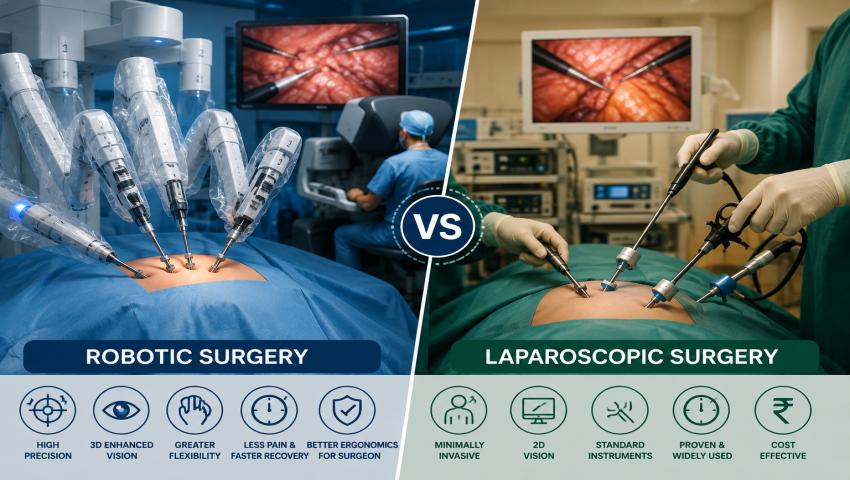
Laparoscopic surgery — also called keyhole surgery — uses a few small incisions through which a thin tube with a camera (laparoscope) and surgical tools are inserted. The surgeon watches a 2D screen and directly moves the instruments by hand.
Key features of laparoscopic surgery:
- Small incisions (usually 0.5–1 cm)
- 2D camera view
- Instruments controlled directly by the surgeon’s hands
- Widely used for gallbladder removal, hernia repair, and gynaecological cancer procedures
What Is Robotic Surgery?
Robotic surgery is an advanced form of minimally invasive surgery where the surgeon sits at a console and controls robotic arms fitted with surgical instruments. The system offers a magnified 3D surgical vision and translates the surgeon’s hand movements into precise, filtered actions inside the body.
Key features of robotic surgery:
- Surgeon operates from a console, not directly at the bedside
- 3D surgical vision with high magnification
- Robotic arms offer a greater range of motion than the human wrist
- Built-in hand tremor filtration for extra precision
Key Differences Between Robotic and Laparoscopic Surgery:
Here’s a quick side-by-side look at robotic surgery vs laparoscopic surgery:
Benefits of Robotic Surgery:
Robotic-assisted surgery offers several advantages, especially for complex or delicate procedures:
- Greater precision — filters out natural hand tremors for smoother, more accurate movements
- Better visualization — 3D surgical vision helps surgeons see the operative area more clearly
- Improved dexterity — robotic arms can rotate and bend in ways the human hand cannot
- Lower conversion to open surgery — fewer cases need to switch to traditional open surgery mid-procedure
- Faster functional recovery — especially useful in surgeries involving nerves, blood vessels, or tight spaces
Benefits of Laparoscopic Surgery:
Laparoscopic surgery is still an excellent, trusted choice for many procedures:
- Lower cost compared to robotic surgery
- Shorter operating time for straightforward cases
- Widely available — most hospitals are equipped for it
- Proven track record for common procedures like gallbladder and hernia surgery
- Faster setup, making it ideal for routine or emergency operations
Robotic Surgery vs Open Surgery:
Compared to traditional open surgery, robotic surgery generally offers:
- Smaller incisions and less visible scarring
- Reduced blood loss during surgery
- Lower risk of infection
- Shorter hospital stay
- Quicker return to daily activities
However, open surgery may still be necessary in certain emergency situations or very advanced disease stages where minimally invasive access isn’t safe.
Recovery Time: Robotic vs Laparoscopic Surgery
Robotic surgery recovery time and laparoscopic surgery recovery time
Which One Is Right for You?
There’s no single “better” option — the right choice depends on your specific condition. In short:
- Choose laparoscopic surgery for routine, less complex procedures where cost and quick scheduling matter
- Choose robotic surgery for complex cases requiring high precision, such as cancer surgeries in tight or delicate spaces
Your surgeon will recommend the best approach based on your diagnosis, surgical history, and overall health.
Dr. Chirag Bhirud's Expertise in Robotic & Laparoscopic Cancer Surgery:
Dr. Chirag Bhirud is a highly experienced Surgical Oncologist in Pune, specialising in both robotic cancer surgery and laparoscopic cancer surgery. With advanced training in minimally invasive techniques, he offers patients:
- Personalised surgical planning based on cancer type and stage
- Access to advanced robotic-assisted surgery for complex tumour removal, including robotic cancer surgery
- Expertise in procedures like the Whipple surgery and pancreatic cancer treatment
- A patient-first approach focused on faster recovery and better outcomes
Patients dealing with conditions like chronic pancreatitis that may eventually require surgery can also benefit from Dr. Chirag Bhirud’s minimally invasive expertise.
Consult Dr. Chirag Bhirud — Surgical Oncologist in Pune:

Dr. Chirag Bhirud
Choosing between robotic and laparoscopic surgery can feel overwhelming, but you don’t have to decide alone. Dr. Chirag Bhirud, an expert Surgical Oncologist in Pune, will guide you to the safest and most effective option based on your specific condition.
Book a consultation with Dr. Chirag Bhirud today to discuss the best surgical approach for you.
FAQs:
Dr. Chirag Bhirud explains that robotic surgery isn’t automatically “better” — it offers greater precision for complex cases, while laparoscopic surgery remains excellent for routine, straightforward procedures.
The main difference is control: in laparoscopic surgery, the surgeon directly handles the instruments, while in robotic surgery, the surgeon operates from a console controlling robotic arms with 3D vision and tremor filtration.
Both are considered safe minimally invasive techniques. Robotic surgery may offer added safety benefits in complex procedures due to greater precision and lower conversion rates to open surgery.
Recovery from both is generally faster than open surgery — most patients return to normal activity within 1–2 weeks, though exact timelines depend on the procedure and individual health.
Yes, robotic surgery typically costs more than laparoscopic surgery due to the advanced technology and specialised training involved.
Robotic surgery is commonly used for cancer surgeries, prostate removal, kidney surgery, gynaecological procedures, and complex gastrointestinal surgeries, including select pancreatic procedures.