
- 29/07/2026
- Dr. Chirag Bhirud
- Blog
When Does Colon Cancer Require Surgery? Understanding Your Options
Receiving a colon cancer diagnosis brings up many critical questions, the most urgent being when is surgery needed for colon cancer. For the vast majority of patients, surgery is the cornerstone of treatment. However, the timing, method, and specific type of operation depend entirely on the individual clinical presentation.
Understanding exactly when surgery is recommended helps patients navigate their treatment path with confidence. As an expert in colorectal oncology, Dr. Chirag Bhirud evaluates several variables, including the precise stage of the disease, the tumor location, and potential acute complications, to determine the safest and most effective surgical roadmap.
Understanding Colon Cancer and the Role of Surgery:
The main objective of any surgical intervention for colon cancer is to achieve complete physical removal of the malignant growth to prevent it from spreading or returning. When the disease is caught before spreading to distant organs, localized operations present the highest statistical probability of a permanent cure.
During evaluation, Dr. Chirag Bhirud looks closely at colon cancer surgery indications, which are the specific clinical reasons that dictate a patient needs an operation. These indications range from an early-stage polyp found during routine screening to advanced structural issues like a completely blocked intestinal tract. The decision framework relies heavily on staging data gathered from scans, biopsies, and blood work.
When is Surgery the Main Treatment for Colon Cancer?
For non-metastatic colon cancer, surgery serves as the primary frontline defence. Doctors evaluate the extent of tissue invasion using standardized colon cancer surgery stages to select the precise surgical path.
1. Early-Stage Colon Cancer (Stage 0 and Stage I):
In the earliest phases of development, malignant cells live exclusively inside the innermost layers of the bowel wall.
- Stage 0: The abnormal cells have not penetrated the deeper tissues. A minimally invasive cancerous polyp removal performed directly during a colonoscopy is frequently the only treatment required to achieve a full cure.
- Stage I: The tumor has grown into the structural layers of the colon wall but remains contained without entering the lymph nodes. If a specialized colonoscopy cannot safely excise the entire growth with clear boundaries, a minor surgical resection is scheduled to guarantee no disease remains.
2. Localized Colon Cancer (Stage II and Stage III):
When the disease advances past the initial tissue wall, the surgical plan expands to protect surrounding systems.
- Stage II: The cancer has moved entirely through the outer muscular layer of the colon wall but has not yet infected nearby lymph nodes. Surgery is highly effective here to remove the affected section.
- Stage III: The disease has broken out of the colon and reached neighbouring lymph nodes. Surgery remains the essential first step to extract the physical mass, but it is standard practice to follow the operation with systemic chemotherapy to eliminate microscopic cells that may linger in the bloodstream.
Emergency Scenarios: When Colon Cancer Requires Immediate Surgery?
While many colon procedures are planned ahead of time, certain acute symptoms create life-threatening situations that require immediate, emergency operations. Dr. Chirag Bhirud treats these conditions as urgent medical emergencies.
1. Complete Bowel Obstruction:
As a tumor expands inside the intestinal tract, it can completely block the passage of digestive waste. A total bowel obstruction causes severe abdominal pain, persistent vomiting, and dangerous bloating. If left untreated, the pressure can cut off local blood flow or cause the bowel to tear. Urgent surgery is required to cut away the blockage and restore normal digestion.
2. Intestinal Perforation or Severe Bleeding:
A rapidly growing tumor can weaken the structural integrity of the colon wall, causing a perforation (a physical tear or hole). This allows bacteria and waste to leak directly into the sterile abdominal cavity, creating a severe infection called peritonitis. Similarly, if a tumor breaks through major local blood vessels, it can cause rapid, uncontrollable internal bleeding. Both situations require immediate emergency surgery to repair the tissue and save the patient’s life.
When is Surgery Not the First Choice?
Surgery is powerful, but it is not always the best initial step for every patient. Depending on the spread of the disease, alternative medical therapies may take priority.
1. Locally Advanced Tumors (Neoadjuvant Therapy First):
If a large tumor grows directly into adjacent vital organs or major blood vessels, operating right away can be highly risky. In these complex cases, Dr. Chirag Bhirud may recommend neoadjuvant therapy. This approach uses upfront chemotherapy or targeted radiation to shrink the tumor down to a manageable size first. Shrinking the mass reduces procedural risks and increases the chances of a highly successful, clean surgical removal later on.
2. Advanced Metastatic Cancer (Stage IV):
When colon cancer spreads to distant parts of the body, such as the lungs or liver, it is classified as Stage IV.
- If there is only one or two isolated, small spots of spread, Chirag Bhirud can perform a synchronized operation to remove both the primary colon tumor and the distant spots during the same treatment timeline.
- If the cancer has spread widely throughout multiple organs, global systemic treatments like chemotherapy, immunotherapy, or targeted biological therapies become the main plan. In these cases, surgery is reserved to manage symptoms, such as placing a medical stent to clear a blocked airway or treating severe bleeding.
Types of Colon Cancer Surgery Performed Today:
Modern medical advancements allow surgeons to use highly customized procedures tailored to the exact position and size of the tumor.
1. Polypectomy and Local Excision via Colonoscopy:
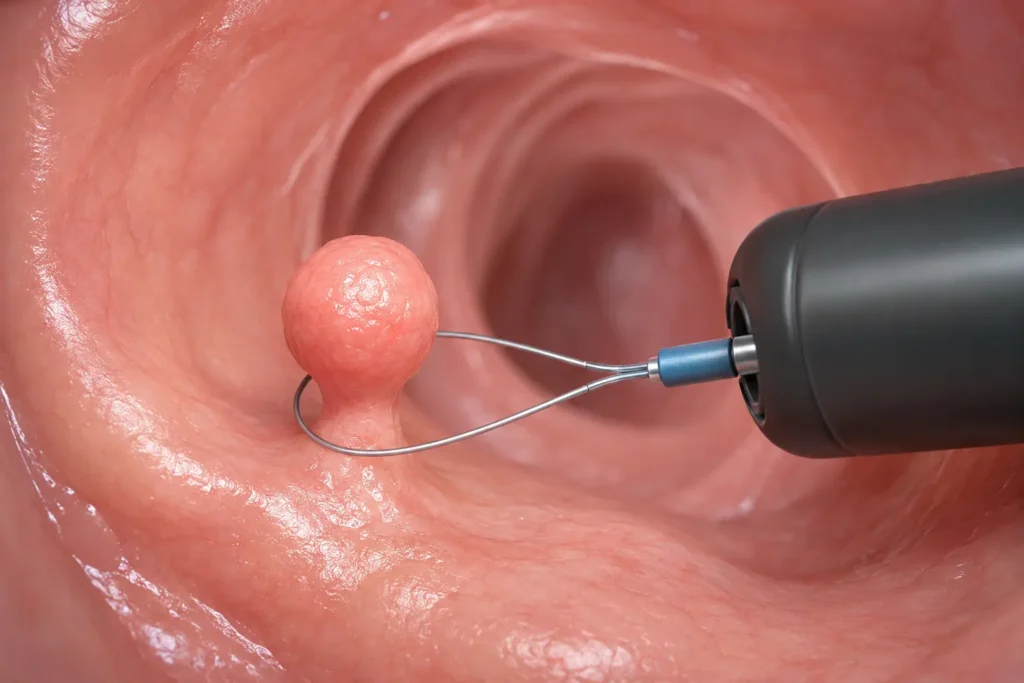
For very early, superficial growths, a surgeon does not need to make an abdominal incision. Using a flexible tube with a camera, the specialist can perform a precise cancerous polyp removal or a local excision. This outpatient approach takes out the small abnormal area along with a tiny border of healthy surrounding lining, ensuring rapid recovery.
2. Colectomy (Bowel Resection):
When a tumor involves the deeper layers of the intestinal wall, a more definitive operation called a colectomy for colon cancer is required. This surgery aims to completely remove the cancer while preserving as much healthy bowel as possible, helping achieve the best long-term treatment outcomes.
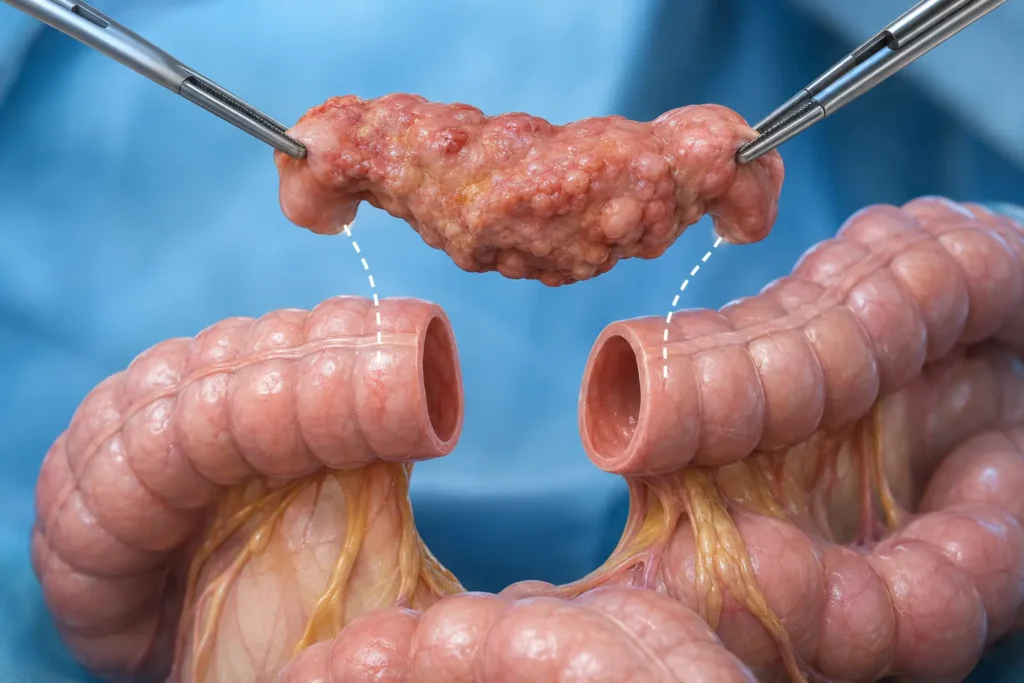
- Partial Colectomy: The surgeon removes the section of the colon holding the tumor along with a safe margin of healthy tissue on both sides. The remaining healthy ends of the bowel are then carefully stitched or stapled back together.
- Lymph Node Removal: During a partial colectomy procedure, it is vital to perform a thorough lymph node removal colon cancer Removing a minimum of 12 nearby lymph nodes allows pathologists to check if the disease has started to spread, which determines if further chemotherapy is needed.
- Achieving Safe Margins: The surgeon must ensure clear, disease-free residual tumor margins. This means that when the tissue is looked at under a microscope, the outer edges show zero remaining cancer cells, drastically lowering the risk of the disease coming back locally.
3. Open vs. Minimally Invasive Approaches:
The physical way a surgery is performed has changed dramatically with modern technology.
- Traditional Open Surgery: This method uses one long incision down the middle of the abdomen. It gives the surgeon direct physical access but typically requires a longer hospital stay and an extended recovery period of six to eight weeks.
- Laparoscopic Colon Cancer Surgery: This modern approach uses a few tiny incisions. The surgeon inserts a camera and specialized, long instruments to perform the operation with high precision. This results in significantly less postoperative pain, minimal scarring, and a much faster return to daily activities.
- Advanced Robotic Surgery: Using the state-of-the-art Da Vinci robotic system, Dr. Chirag Bhirud performs Robotic Cancer Surgery in Pune with exceptional precision and control. He operates robotic arms that provide magnified, high-definition 3D visualisation and enhanced instrument dexterity. This advanced technology is highly valuable when working within tight anatomical spaces, helping protect delicate nerves and healthy surrounding tissues while ensuring precise tumour removal.
Do I Need a Temporary or Permanent Stoma Bag?
One of the most common concerns patients have is whether they will need an external bag to collect body waste. This involves an ostomy procedure that creates a small opening on the abdomen called a stoma.
Whether a patient requires a colostomy or ileostomy stoma depends on how safely the remaining bowel segments can be reconnected right after the tumor is removed.
- Temporary Stoma: If the remaining bowel tissues are inflamed or if an emergency surgery was done for a blockage or tear, stitching the ends together immediately carries a high risk of leaking. In this case, a temporary stoma is created to divert waste away, giving the internal connections time to heal safely. A few months later, a minor follow-up operation is performed to reverse the stoma and restore normal bowel habits.
- Permanent Stoma: It is generally reserved for situations where the cancer sits extremely low in the digestive tract, such as rectal cancer, forcing the removal of the entire sphincter muscle mechanism, or when advanced disease makes a safe reconnection impossible
What to Expect Before and After Colon Surgery?
A successful surgical outcome relies on comprehensive preparation and a structured recovery plan.
Before the Operation:
Patients go through a detailed medical clearance process, including blood panels, heart checks, and imaging. A key step is the bowel preparation protocol, where patients consume a specialized liquid solution the day before surgery to completely clear out waste from the intestines, minimizing the risk of bacterial contamination during the procedure.
After the Operation:
- Hospital Stay: Patients who undergo a minimally invasive laparoscopic or robotic procedure usually go home within four to five days, while open surgeries require a longer stay.
- Dietary Transition: The digestive system needs time to wake up after anesthesia. Patients start with clear liquids, then move to soft foods, and eventually return to a regular solid diet as bowel function naturally recovers.
- Activity Levels: While heavy lifting must be avoided for several weeks, Chirag Bhirud encourages light walking the very day after surgery. Gentle movement stimulates blood circulation, supports lung function, and helps jumpstart the digestive tract.
Why Choose an Advanced Colorectal Surgeon in Pune?
Colorectal surgeries require extreme precision to ensure all cancer cells are completely removed while preserving vital nerve and bowel functions. Dr. Chirag Bhirud brings over 11 years of specialized surgical oncology experience, having treated more than 10,000 cancer patients — including colon, stomach cancer, and rectal cancer cases — with excellent clinical outcomes
Trained in advanced laparoscopic techniques and fellowship-certified in robotic surgery using the Da Vinci platform, Dr. Chirag Bhirud provides patients across Pune and Pimpri-Chinchwad access to cutting-edge, minimally invasive care. Operating out of top-tier facilities like Jupiter Hospital in Baner and his dedicated clinics, his patient-first approach ensures a highly personalized treatment plan designed for a safe, comfortable, and rapid recovery.
Conclusion:
So, when is surgery needed for colon cancer? It is needed in almost every case where the tumor is localized or causing structural complications like blockages or bleeding. Whether it requires a quick colonoscopic removal or a detailed bowel resection surgery for colon cancer, acting early is key. If you or a family member are navigating a recent diagnosis or exploring advanced, minimally invasive treatment options, scheduling a personalized evaluation with Dr. Chirag Bhirud can help you choose the safest path forward.
Frequently Asked Questions:
Yes, early-stage colon cancer caught at Stage 0 or Stage I can frequently be completely cured through surgery alone. For these early cases, a localized cancerous polyp removal or a standard colectomy for colon cancer removes all malignant cells before they can spread, eliminating the need for chemotherapy.
If a patient declines a necessary colectomy for colon cancer, the tumor will continue to grow through the intestinal wall. Over time, this leads to severe complications like a complete bowel obstruction, severe internal bleeding, or an intestinal tear. The cancer will also inevitably spread to the lymph nodes and distant organs, making it much harder to treat.
Once colon cancer surgery indications are confirmed, the operation is usually planned within a few weeks of diagnosis. This brief window allows the medical team to complete essential staging scans and bowel prep. However, if a patient develops an emergency like a blocked or torn bowel, Dr. Chirag Bhirud will perform the surgery immediately.
During a standard partial colectomy procedure, the surgeon typically removes about one-fourth to one-third of the colon. This length is necessary to ensure the tumor is completely taken out alongside healthy residual tumor margins and adjacent lymph nodes. The remaining healthy segments are reconnected, allowing the digestive tract to function normally after healing.
Yes, a bowel resection is considered a major surgical procedure. However, modern techniques like laparoscopic colon cancer surgery and advanced robotic procedures make the process much easier on the body than traditional open surgery. These minimally invasive options involve smaller cuts, reduce blood loss, cause less postoperative pain, and help patients recover much faster.
Stage III means the cancer has reached nearby lymph nodes, requiring a comprehensive lymph node removal colon cancer procedure combined with chemotherapy. When performed by an experienced specialist like Dr. Chirag Bhirud, advanced multi-modality treatment delivers a strong five-year survival rate, ranging from 40% to 70% depending on the exact number of nodes involved and overall patient health.
Most patients do not need a permanent colostomy bag. If the bowel segments are healthy, they are reconnected immediately during the operation. A colostomy or ileostomy stoma is usually temporary and is only created during emergency surgeries or complex cases to let the internal connections heal safely before being reversed a few months later.